Physical Address
304 North Cardinal St.
Dorchester Center, MA 02124
Physical Address
304 North Cardinal St.
Dorchester Center, MA 02124
Why is Godzilla Minus Zero called “Minus Zero”? Explore the title meaning, story, trailer, cast, IMAX release and November 6, 2026 release date.
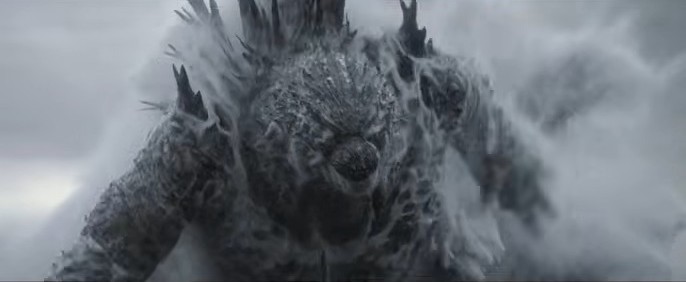
Godzilla Minus Zero (2026) is finally giving fans a clearer look at the next chapter of Takashi Yamazaki’s acclaimed Godzilla saga — and its strangest mystery may not even be Godzilla himself.
It’s the title.
Why is the movie called Godzilla Minus Zero?
After Godzilla Minus One, the title sounds mathematically impossible. But the official synopsis provides an important clue:
“War reduced Japan to zero, and Godzilla plunged it into minus.”
Two years have passed since the events of Godzilla Minus One. Japan has fought its way toward recovery and is attempting to reclaim something resembling normal life.
Then Godzilla returns.
And suddenly, that fragile recovery is threatened all over again.
That is the key to understanding “Minus Zero.”
The new Godzilla Minus Zero 1.43:1 trailer gives audiences another look at Takashi Yamazaki’s sequel, which has been shot specifically for the IMAX format.
The movie returns to postwar Japan, where the country is attempting to rebuild after the devastation of World War II and the destruction caused by Godzilla.
But the peace doesn’t last.
The official story description reveals that two years after the events of Godzilla Minus One, Japan has endured enormous struggles to recover and finally reclaim its everyday life.
Just when humanity believes it has achieved a hard-won peace, a new threat strikes and crushes that hope.
The trailer therefore isn’t simply selling a bigger monster movie.
It’s selling the return of the nightmare.
And the tagline makes the stakes especially ominous:
“There is no third time. Everything ends here.”
Godzilla Minus Zero opens in North American theaters on November 6, 2026.
In Japan, the movie arrives on November 3, 2026, which is particularly significant because November 3 is Godzilla Day and the same date the original 1954 Godzilla premiered in Japan.
The North American release follows just three days later.
| Godzilla Minus Zero (2026) | Details |
|---|---|
| Japanese title | ゴジラ-0.0 |
| English title | Godzilla Minus Zero |
| Japan release | November 3, 2026 |
| North America release | November 6, 2026 |
| Genre | Kaiju / monster film |
| Director | Takashi Yamazaki |
| Writer | Takashi Yamazaki |
| VFX | Takashi Yamazaki |
| Runtime | Approximately 135 minutes |
| Production | Toho Studios, Robot Communications |
| Japan distributor | Toho |
| North America distributor | GKIDS |
| Format | Filmed For IMAX |
| Language | Japanese / English |
The film will also have its world premiere at the 2026 New York Film Festival on September 26.
This is the question everyone is asking.
And here’s the simplest explanation:
In Godzilla Minus One, Takashi Yamazaki described postwar Japan as essentially being at zero.
World War II had devastated the country.
Then Godzilla arrived and made the situation even worse.
So Japan went from zero to minus one.
Yamazaki himself explained the meaning of Godzilla Minus One in those terms when discussing the original film’s title. He also said the title could carry multiple meanings — including the idea of Japan being pushed even further down after the war, the film taking place before the original 1954 Godzilla, and the idea of losing something.
So the basic progression was:
World War II → Japan at zero
Godzilla → Japan pushed into minus
That’s Godzilla Minus One.
But now look at where Minus Zero begins.
Two years after Godzilla Minus One, Japan has been rebuilding.
The official synopsis specifically says the country has endured agonizing struggles to “achieve recovery and finally reclaim its daily life.”
In other words, Japan is trying to climb back toward zero.
And then Godzilla comes back.
That’s where the title Minus Zero becomes interesting.
The movie appears to be playing with the idea of a country that has fought its way back toward its starting point — only to have that fragile stability destroyed again.
So rather than simply meaning:
0 − Godzilla = Godzilla
the title can be read thematically as:
Japan → recovering toward zero → Godzilla strikes again → back into the minus
The official wording strongly supports this interpretation.
Toho has not officially published a complete explanation saying “this is exactly what Minus Zero means.”
When the title was originally announced, the official Godzilla site explicitly left the meaning mysterious and told fans to stay tuned.
Now that the synopsis has been revealed, however, the connection between zero, recovery and another descent into devastation is much clearer.
So it’s best to describe this as the strongest story-supported interpretation, rather than claiming the filmmakers have definitively explained every part of the title.
Technically, this is where the title gets wonderfully weird.
In ordinary mathematics:
−0 = 0.
There isn’t really a meaningful difference between zero and negative zero in basic arithmetic.
And that’s probably why the title immediately caught people’s attention.
But Godzilla Minus Zero isn’t really trying to give us a mathematics lesson.
It’s a symbolic title.
The word “minus” represents loss, destruction and being pushed backward.
“Zero” represents the starting point — the level Japan was trying to recover from after the war.
So “Minus Zero” can be understood as the threat of being pulled back from the brink of recovery.
And that’s considerably darker than simply saying “Godzilla returns.”
The two titles are deliberately connected.
Godzilla Minus One showed Japan immediately after World War II, when the country was already devastated.
Godzilla then made everything even worse.
Godzilla Minus Zero jumps forward two years.
Japan has begun rebuilding.
People are attempting to return to normal.
The country isn’t necessarily at the absolute bottom anymore.
And then the monster returns.
That means the sequel isn’t simply repeating the first movie’s premise.
It’s asking a different question:
What happens when people finally believe they’ve escaped the worst — and the nightmare comes back?
That’s why the “zero” matters.
The movie takes place in 1949, two years after the events of Godzilla Minus One.
The story continues the Shikishima family’s journey as Japan attempts to recover from the destruction of the war and Godzilla’s previous attack.
Kōichi Shikishima, played by Ryunosuke Kamiki, returns.
So does Noriko Shikishima, played by Minami Hamabe.
But their lives have moved forward.
Japan has changed.
The country is attempting to rebuild and restore ordinary life.
Then another Godzilla-related calamity emerges.
The official synopsis deliberately keeps much of the plot secret, but the central setup is clear: humanity has barely recovered before another catastrophic threat appears.
The sequel doesn’t immediately continue from the exact final moments of the first film.
Instead, it jumps forward two years.
That time jump is important.
Japan has had time to recover.
The people who survived the previous catastrophe have had time to rebuild their lives.
And the Shikishima family has continued forward.
That creates an especially cruel setup for the sequel.
The characters aren’t simply trying to survive the initial postwar disaster anymore.
They have something to lose again.
They’ve rebuilt.
They’ve created a life.
And now Godzilla threatens to take it away.
Several major actors from Godzilla Minus One return for the sequel.
The cast includes:
Min Tanaka joins the returning cast as Kanji Murakami, a biologist carrying psychological scars from the war.
The returning characters are particularly important because Godzilla Minus Zero isn’t being treated as an unrelated monster movie.
It’s a direct continuation of the story established by Minus One.
Ryunosuke Kamiki returns as Kōichi Shikishima, the former kamikaze pilot whose story formed the emotional center of Godzilla Minus One.
His return means the sequel can continue exploring the psychological consequences of the first Godzilla attack rather than starting over with an entirely new cast.
Minami Hamabe returns as Noriko Shikishima, Kōichi’s wife.
Her survival at the end of Godzilla Minus One becomes particularly important to the continuation of their story.
Perhaps the most important returning name isn’t an actor.
It’s Takashi Yamazaki.
Yamazaki returns as:
That creative continuity is one of the reasons fans have so much confidence in the sequel.
Yamazaki’s Godzilla Minus One won the Academy Award for Best Visual Effects, making history as the first Godzilla movie to win an Oscar.
This is another major difference from the previous movie.
Godzilla Minus Zero is the first Japanese production to be Filmed For IMAX.
The movie was shot using high-definition digital cameras certified by IMAX and optimized specifically for the format’s image and sound presentation.
And that matters for a Godzilla movie.
The official material emphasizes that the giant monster will be presented at a scale designed for IMAX screens.
So this isn’t simply an IMAX version created after the movie was finished.
The production was Filmed For IMAX from the beginning.
The official trailer is presented in 1.43:1, the taller IMAX aspect ratio associated with the largest IMAX presentations.
That gives Godzilla considerably more vertical presence on screen.
For a monster this large, that’s a pretty important visual advantage.
Instead of only making the image wider, the taller frame can make the creature feel more imposing because more of its body and the surrounding environment can occupy the screen.
And given that Godzilla Minus Zero was specifically filmed for IMAX, the 1.43:1 presentation is part of the movie’s intended cinematic experience.
For North American audiences, Godzilla Minus Zero opens exclusively in theaters on November 6, 2026.
GKIDS is handling the wide North American theatrical release, while Toho will release the movie in Japan on November 3.
There is currently no announced streaming release date.
No Netflix release has been announced.
The movie is being positioned first and foremost as a theatrical event.
Yes.
The film was specifically Filmed For IMAX, making it the first Japanese production to receive that designation.
| Godzilla Minus One | Godzilla Minus Zero | |
|---|---|---|
| Setting | Postwar Japan | Japan in 1949 |
| Time | Shortly after WWII | Two years later |
| Japan’s condition | Devastated / “zero” | Recovering toward normal life |
| Godzilla | First major catastrophe | New threat returns |
| Director | Takashi Yamazaki | Takashi Yamazaki |
| Main cast | Kamiki, Hamabe and others | Returning characters |
| IMAX | Not Filmed For IMAX | Filmed For IMAX |
| Story | Japan falls below zero | Recovery is threatened again |
The biggest thematic difference is therefore where Japan is when Godzilla arrives.
The first movie starts from devastation.
The second starts with recovery.
That makes the sequel’s threat arguably more frightening.
Yes.
Godzilla Minus Zero is a direct sequel to Godzilla Minus One, continuing the story of the Shikishima family two years after the previous film.
This isn’t another standalone reboot or a completely separate continuity.
The returning cast and 1949 setting firmly connect it to the previous movie.
The official marketing uses the ominous line:
“There is no third time. Everything ends here.”
That has naturally led fans to wonder whether Minus Zero is intended to be the final film in this particular story.
However, that phrase does not necessarily mean Toho is ending the entire Godzilla franchise.
It could refer to the movie’s story, the characters’ situation, or the consequences of the new threat.
So it would be premature to interpret the line as confirmation that this is the final Japanese Godzilla movie ever.
The strongest story-supported explanation is that postwar Japan was reduced to “zero” by World War II, while Godzilla pushed the country into the “minus” in the previous movie. Two years later, Japan has struggled to recover toward normal life, only for another Godzilla threat to strike. The title therefore appears to play on Japan’s fragile position around “zero.”
Yes. Godzilla Minus Zero is a direct sequel set two years after Godzilla Minus One.
Mathematically, negative zero is essentially zero. But the movie’s title is symbolic rather than a literal arithmetic equation. The official synopsis connects “zero” to Japan’s postwar recovery and “minus” to Godzilla’s devastation.
The movie opens in Japan on November 3, 2026 and in North American theaters on November 6, 2026.
Yes. It is the first Japanese production Filmed For IMAX, with production using IMAX-certified digital cameras and imagery and sound optimized for IMAX screens.
Takashi Yamazaki wrote, directed and supervised the visual effects.
Yes. Kamiki returns as Kōichi Shikishima.
Yes. Hamabe returns as Noriko Shikishima.
The sequel is set in 1949, two years after the events of Godzilla Minus One.
No Netflix release has been announced. The film is being released theatrically first.
The name Godzilla Minus Zero sounds like a joke at first.
After all, what exactly is “minus zero”?
But the title makes considerably more sense when you look at the story.
World War II reduced Japan to zero. Godzilla pushed it into the minus.
That was the foundation of Godzilla Minus One.
Now, two years later, Japan has struggled to rebuild and reclaim ordinary life. It is trying to climb back toward zero.
Then Godzilla returns.
So “Minus Zero” appears to represent a fragile recovery being threatened all over again — a country that has fought its way back toward the starting line only to face another catastrophe.
The filmmakers have not yet provided a definitive, one-sentence explanation of every layer of the title, so that’s the important caveat. But the official synopsis makes the zero-to-minus idea impossible to ignore.
And then there’s the final warning:
“There is no third time. Everything ends here.”
Godzilla Minus Zero opens in North American theaters November 6, 2026, and for the first time in Japanese Godzilla history, the movie was Filmed For IMAX.
This time, Godzilla isn’t just coming back.
He’s coming back when Japan finally thought it was safe.